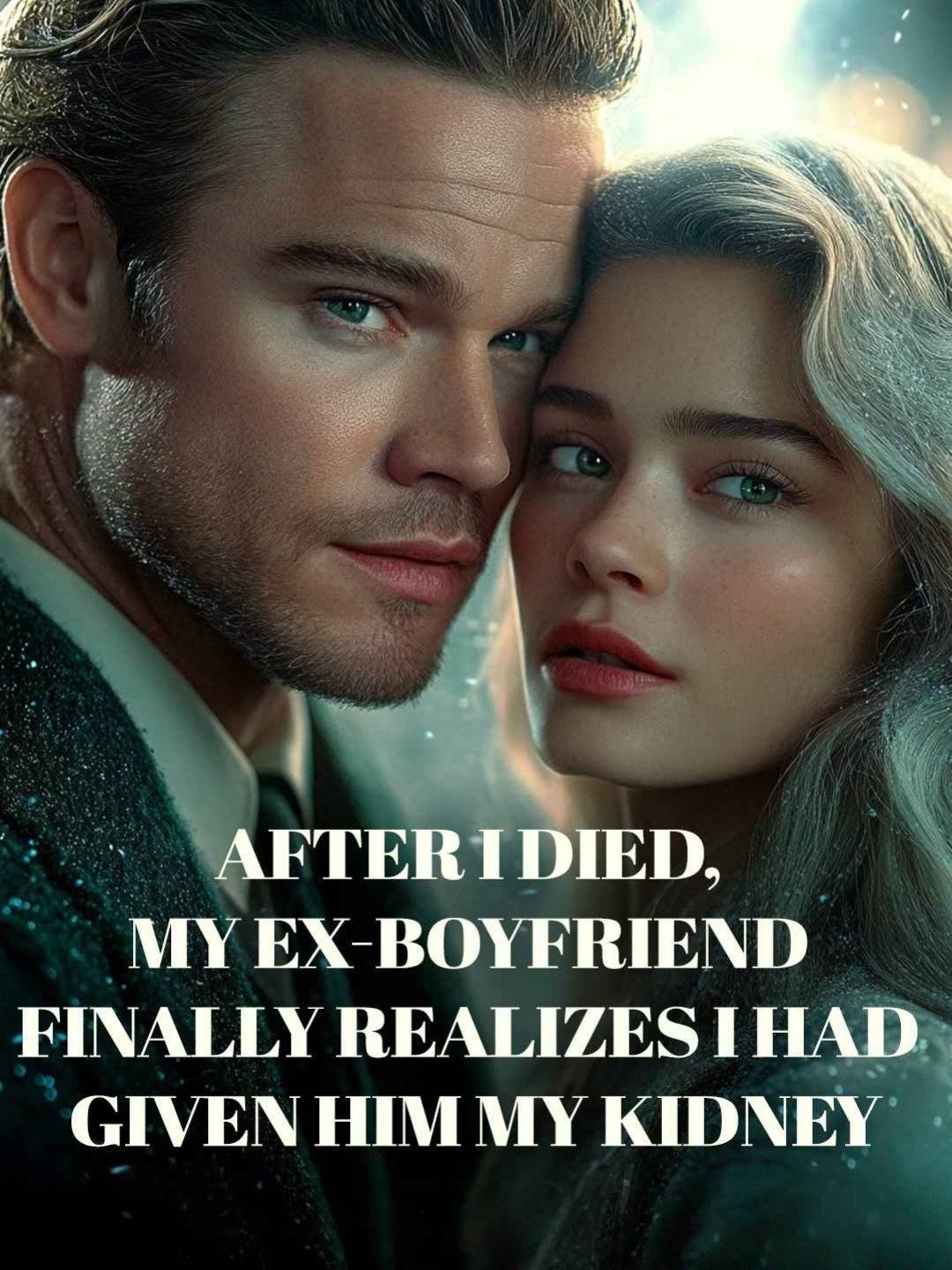
On the day Marshall Ward stood at the pinnacle of global technology to receive his award. I, Millie Martin, was being denied further treatment by the hospital because I couldn't afford the costs for my kidney failure. On the television screen, the host asked him to call the person he wanted to thank the most. Without hesitation, he dialed my number. He said, "Millie, do you regret leaving me?" The exorbitant medical bill in my hand was already crumpled from my grip, but I still responded casually, "Marshall, you're a big celebrity now. Would you consider keeping me as your sugar baby?" On screen, he hung up the phone with a stone-cold expression. Then, his familiar voice reached my ears, ice-cold. "Now, I have nothing to thank anymore." But what he didn't know was that I was the one who had donated my kidney to him when he was critically ill five years ago.
Limited-time free event: This free viewing activity is jointly launched by ReelShort and FreeDrama. Click the button to download the APP and watch all episodes of After I died, my ex-boyfriend finally realizes I had given him my kidney for free.
This gut-wrenching narrative redefines romantic tragedy through visceral irony: the protagonist, Millie Martin, saves her ex-boyfriend Marshall Ward’s life by donating her kidney—only to be erased from his memory and dignity when he ascends to global stardom. Her quiet suffering contrasts sharply with his televised triumph, exposing how systemic inequity (medical debt, erasure of female labor) weaponizes love as collateral. The story isn’t about revenge—it’s about asymmetry: one person’s sacrifice rendered invisible, another’s gratitude performed for cameras.
The world of After I died, my ex-boyfriend finally realizes I had given him my kidney operates on layered silences—hospital corridors that deny care, award stages that reward ego over empathy, and phones that connect only to disconnect deeper. Time isn’t linear here; it folds: the past donation haunts the present refusal, making every “thank you” a wound. This isn’t dystopia—it’s realism sharpened to a point, where healthcare access, celebrity culture, and gendered sacrifice collide without resolution.
The plot’s power lies in its inverted cause-and-effect: the climax (Marshall’s call) arrives *before* the revelation (Millie’s donation), forcing readers to reinterpret every earlier moment. That structural pivot mirrors Millie’s own lived dissonance—her body sustaining him while her voice is muted. After I died, my ex-boyfriend finally realizes I had given him my kidney doesn’t climax with reunion or justice—it ends in chilling stillness, where truth exists but changes nothing. That’s the haunting design: awareness without redemption.
Experience this emotionally precise, structurally daring drama firsthand—download the FreeDrama App now.
After I died, my ex-boyfriend finally realizes I had given him my kidney is not just a short drama, it’s like a mirror reflecting the struggles and growth of the characters…
This short drama After I died, my ex-boyfriend finally realizes I had given him my kidney is a double impact on visuals and emotions…
Each episode of After I died, my ex-boyfriend finally realizes I had given him my kidney is like a little puzzle…
Limited-time free event: This free viewing activity is jointly launched by ReelShort and FreeDrama. Click the button to download the APP and watch all episodes of After I died, my ex-boyfriend finally realizes I had given him my kidney for free.
 Fri Apr 03 2026 00:00:00 GMT+0800 (China Standard Time)
 Fri Apr 03 2026 00:00:00 GMT+0800 (China Standard Time)
 Fri Apr 03 2026 00:00:00 GMT+0800 (China Standard Time)
 Fri Apr 03 2026 00:00:00 GMT+0800 (China Standard Time)
 Fri Apr 03 2026 00:00:00 GMT+0800 (China Standard Time)
 Fri Apr 03 2026 00:00:00 GMT+0800 (China Standard Time)
 Fri Apr 03 2026 00:00:00 GMT+0800 (China Standard Time)
 Fri Apr 03 2026 00:00:00 GMT+0800 (China Standard Time)
 Fri Apr 03 2026 00:00:00 GMT+0800 (China Standard Time)
 Fri Apr 03 2026 00:00:00 GMT+0800 (China Standard Time)