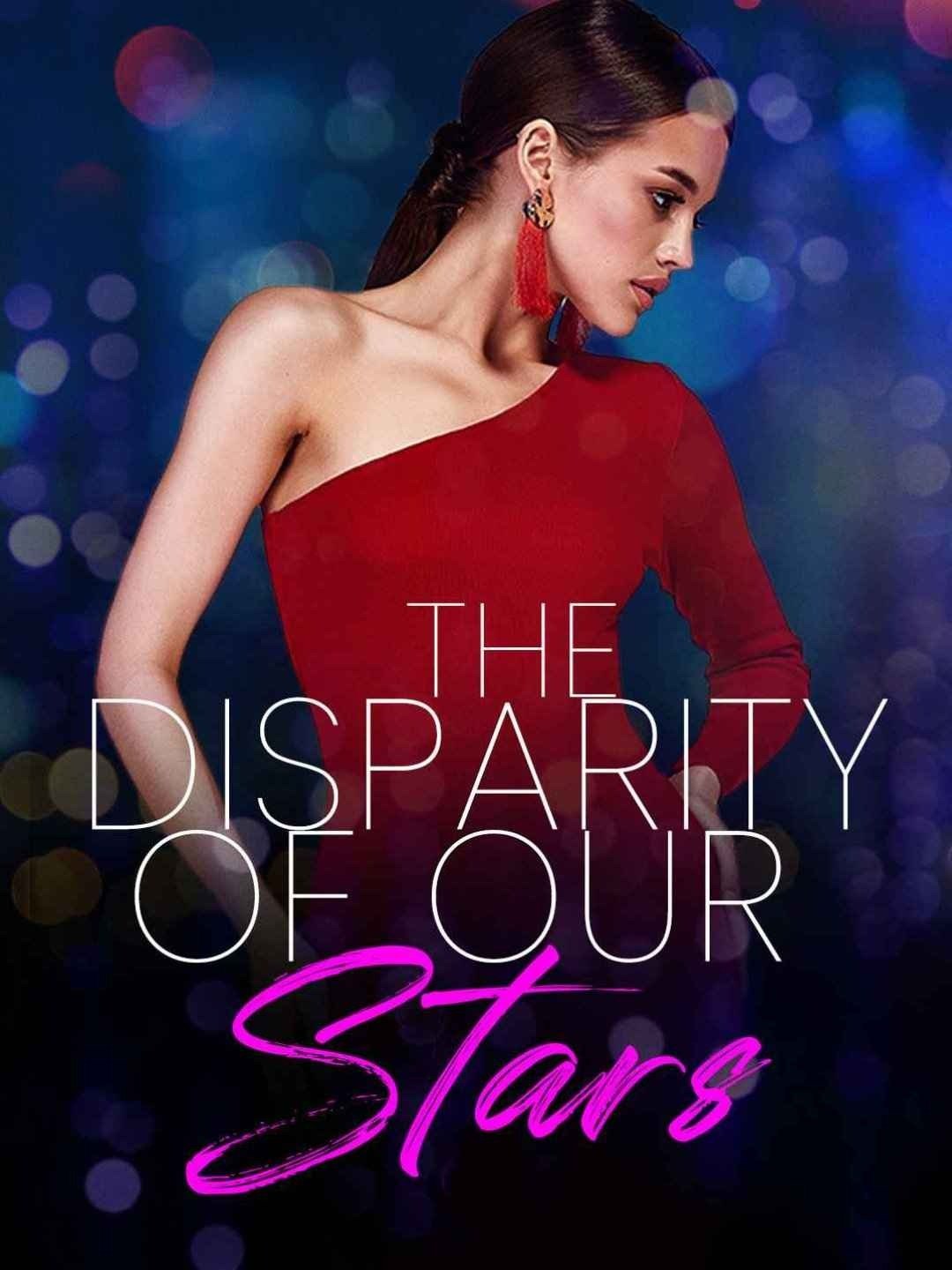
I was the smartest and prettiest child in the entire orphanage. But everyone who wanted to adopt me ended up dying in bizarre ways, and the police questioned me, the sole witness, about what I had seen. "I don't know either. It must all be an accident." "There's no one at home except for me and my parents."
Limited-time free event: This free viewing activity is jointly launched by ReelShort and FreeDrama. Click the button to download the APP and watch all episodes of The Disparity of Our Stars for free.
The chilling opening line—“I was the smartest and prettiest child in the entire orphanage”—immediately establishes a tone of eerie contrast: brilliance and beauty entangled with misfortune. The Disparity of Our Stars constructs its world around systemic abandonment and supernatural ambiguity, where institutional care masks latent danger. The orphanage isn’t just a setting—it’s a liminal space where fate bends, and every adoption attempt collapses under uncanny causality. This isn’t mere coincidence; it’s narrative architecture designed to question agency, innocence, and the illusion of safety in structured environments.
The story unfolds through sharp, fragmented confessions—two seemingly unrelated statements (“I don’t know either…” and “There’s no one at home except for me and my parents”) that resonate like fractured mirrors. This duality reflects the show’s structural backbone: parallel timelines or psychological layers, where childhood trauma retroactively rewrites domestic reality. The repetition of silence—“I don’t know”—isn’t evasion; it’s thematic scaffolding, reinforcing how memory, truth, and testimony collapse under institutional scrutiny. Every pause carries weight; every omission is intentional.
At its core, The Disparity of Our Stars treats disparity not as social inequality alone, but as a metaphysical constant—stars diverging in luminosity, orbits, and destiny. The protagonist’s survival isn’t luck; it’s gravitational inevitability within a universe governed by unspoken rules. Her intelligence and beauty aren’t assets—they’re accelerants in a system that punishes exceptional presence. This worldview transforms tragedy into mythic logic, inviting viewers to decode patterns beyond plot: Why do stars drift? Who defines whose light endures?
Ready to experience the layered tension and symbolic depth firsthand? Download the FreeDrama App now for immersive, ad-free access.The Disparity of Our Stars is not just a short drama, it’s like a mirror reflecting the struggles and growth of the characters…
This short drama The Disparity of Our Stars is a double impact on visuals and emotions…
Each episode of The Disparity of Our Stars is like a little puzzle…
Limited-time free event: This free viewing activity is jointly launched by ReelShort and FreeDrama. Click the button to download the APP and watch all episodes of The Disparity of Our Stars for free.
 Fri Apr 03 2026 00:00:00 GMT+0800 (China Standard Time)
 Fri Apr 03 2026 00:00:00 GMT+0800 (China Standard Time)
 Fri Apr 03 2026 00:00:00 GMT+0800 (China Standard Time)
 Fri Apr 03 2026 00:00:00 GMT+0800 (China Standard Time)
 Fri Apr 03 2026 00:00:00 GMT+0800 (China Standard Time)
 Fri Apr 03 2026 00:00:00 GMT+0800 (China Standard Time)
 Fri Apr 03 2026 00:00:00 GMT+0800 (China Standard Time)
 Fri Apr 03 2026 00:00:00 GMT+0800 (China Standard Time)
 Fri Apr 03 2026 00:00:00 GMT+0800 (China Standard Time)
 Fri Apr 03 2026 00:00:00 GMT+0800 (China Standard Time)