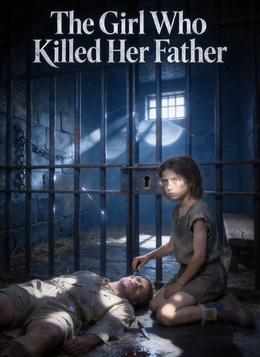
He was the beloved, praised husband of the village, yet at night he tied my mother to a wooden horse, whipping her as he abused her. I watched him stagger from the pool of blood, adjusting his clothes after his cruelty. On the day he sold me, he stole a jade pendant—the emblem of the Duke’s family. When my uncle razed the village, I sent my own father to hell. The village cursed my mother as cruel, never knowing the real killer was me.
Limited-time free event: This free viewing activity is jointly launched by ShortMax and FreeDrama. Click the button to download the APP and watch all episodes of The Girl Who Killed Her Father for free.
This haunting narrative unfolds in a tightly controlled feudal microcosm—where honor is performative, truth is buried beneath communal denial, and violence festers behind closed doors. The village operates as both witness and accomplice: praising the father publicly while ignoring his nocturnal brutality, branding the mother “cruel” for surviving, and erasing the daughter’s silent vigilance. Power isn’t held by lords alone—it’s weaponized through gendered silence, inherited shame, and the erasure of testimony. Every detail—the wooden horse, the jade pendant, the blood-soaked ground—functions as a symbolic anchor, grounding mythic retribution in visceral, historical realism.
The story rejects linear revenge tropes. Instead, it employs a restrained, almost liturgical cadence: each sentence is a measured revelation, building not toward catharsis but toward inevitability. The protagonist’s voice remains calm, even detached—underscoring how trauma reshapes agency into precision. Her act of sending her father “to hell” isn’t impulsive; it’s the culmination of observation, memory, and strategic alignment with larger forces (her uncle’s raid). This structural restraint mirrors the world’s suffocating norms—and makes her final agency all the more devastating.
The Girl Who Killed Her Father refuses to reduce its heroine to vengeance alone. It interrogates complicity, inheritance, and the cost of truth-telling in societies that reward silence. The jade pendant—a stolen emblem of legitimacy—becomes a double symbol: of stolen power and reclaimed identity. In this world, justice isn’t declared—it’s enacted in shadows, remembered in fragments, and finally named. The Girl Who Killed Her Father invites us not to judge, but to witness—and then, to download the full experience. FreeDrama App
The Girl Who Killed Her Father is not just a short drama, it’s like a mirror reflecting the struggles and growth of the characters…
This short drama The Girl Who Killed Her Father is a double impact on visuals and emotions…
Each episode of The Girl Who Killed Her Father is like a little puzzle…
Limited-time free event: This free viewing activity is jointly launched by ShortMax and FreeDrama. Click the button to download the APP and watch all episodes of The Girl Who Killed Her Father for free.
 Tue Apr 07 2026 00:00:00 GMT+0800 (China Standard Time)
![[Dubbed]Lady Kelly's Counterattack](https://video3.en-freereels.com/image/95_de223909f62458171a78d265021e85da_8eefe6a3b20b4658901bd66abe3e47ff.jpg) Tue Apr 07 2026 00:00:00 GMT+0800 (China Standard Time)
Tue Apr 07 2026 00:00:00 GMT+0800 (China Standard Time)
 Tue Apr 07 2026 00:00:00 GMT+0800 (China Standard Time)
![[Dubbed] Return of the Racing Legend](https://video3.en-freereels.com/image/95_e287f7c3106b03d0df04493cb863b50d_7078e26b931a4540b5c46a3d9a359765.jpg) Tue Apr 07 2026 00:00:00 GMT+0800 (China Standard Time)
Tue Apr 07 2026 00:00:00 GMT+0800 (China Standard Time)
 Tue Apr 07 2026 00:00:00 GMT+0800 (China Standard Time)
 Tue Apr 07 2026 00:00:00 GMT+0800 (China Standard Time)
 Tue Apr 07 2026 00:00:00 GMT+0800 (China Standard Time)
 Tue Apr 07 2026 00:00:00 GMT+0800 (China Standard Time)
 Tue Apr 07 2026 00:00:00 GMT+0800 (China Standard Time)
 Tue Apr 07 2026 00:00:00 GMT+0800 (China Standard Time)