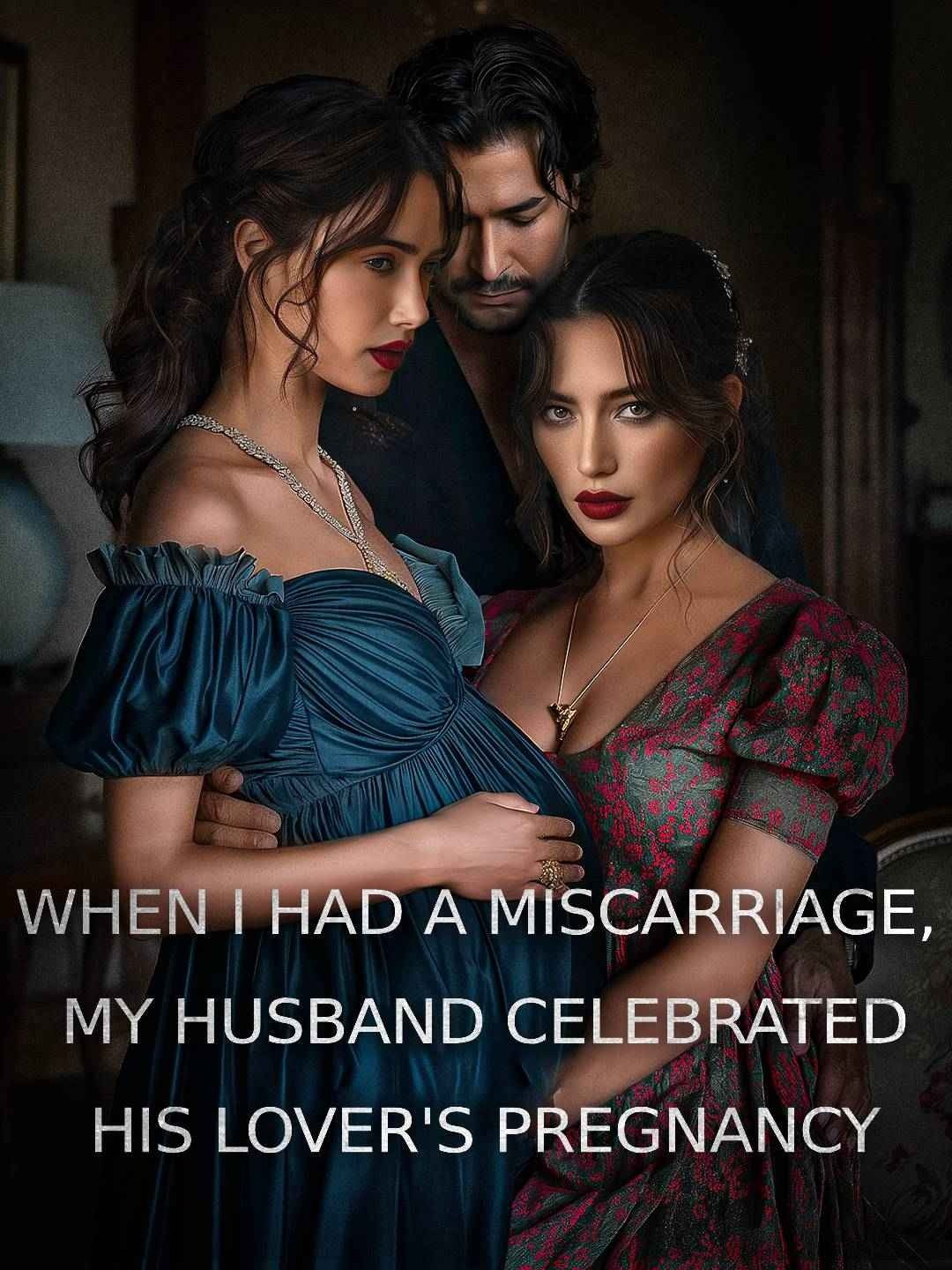
I was hospitalized for a week because of my miscarriage. Before I was discharged from the hospital, Zach finally showed up. Melanie was beside him, holding his arm intimately, and said shyly, "Winona, Zach is going to hold a celebration party for me tonight to celebrate my pregnancy. You must come! After all, I can get pregnant thanks to Zach's help." Seeing that I didn't say anything, Zach said impatiently, "You lost your baby, and you don't allow Melanie to get pregnant? "Winona, how can you become so vicious? "No matter what, you must be there tonight!" That night, I attended the banquet in mourning clothes, which surprised everyone.
Limited-time free event: This free viewing activity is jointly launched by ReelShort and FreeDrama. Click the button to download the APP and watch all episodes of When I had a miscarriage, my husband celebrated his lover's pregnancy for free.
At its core, When I had a miscarriage, my husband celebrated his lover's pregnancy is not just a story about infidelity—it’s a surgical dissection of emotional violence masked as normalcy. The narrative world operates on stark asymmetry: Winona’s physical and psychological collapse (hospitalization, grief, silence) is met not with empathy but with performative cruelty—Melanie’s “shy” announcement, Zach’s accusatory rhetoric, the grotesque demand to attend her celebration in mourning clothes. This isn’t realism; it’s heightened moral allegory, where every detail serves thematic escalation.
The plot unfolds in three tightly calibrated acts: trauma (miscarriage + hospitalization), violation (Zach and Melanie’s arrival + ultimatum), and symbolic resistance (Winona attending the banquet in black). There are no flashbacks or digressions—the timeline is linear, urgent, and unrelenting. This structural austerity forces the reader to sit with each unbearable beat, making the emotional impact cumulative rather than episodic. The world feels claustrophobic by design: all power resides in Zach’s words, Melanie’s proximity, and the social expectation to comply—even in mourning.
Mourning clothes at a pregnancy banquet aren’t just irony—they’re world-defining. In this universe, grief has no sanctioned space; joy is weaponized, vulnerability punished, and loyalty treated as obligation to the abuser. The link between bodily loss (Winona’s miscarriage) and social erasure (her silenced presence at the party) reveals a society where women’s suffering is either invisible or exploited for spectacle. When I had a miscarriage, my husband celebrated his lover's pregnancy constructs its reality through such visceral, resonant contradictions.
Experience this powerful, emotionally raw drama in full—download the FreeDrama App today.
When I had a miscarriage, my husband celebrated his lover's pregnancy is not just a short drama, it’s like a mirror reflecting the struggles and growth of the characters…
This short drama When I had a miscarriage, my husband celebrated his lover's pregnancy is a double impact on visuals and emotions…
Each episode of When I had a miscarriage, my husband celebrated his lover's pregnancy is like a little puzzle…
Limited-time free event: This free viewing activity is jointly launched by ReelShort and FreeDrama. Click the button to download the APP and watch all episodes of When I had a miscarriage, my husband celebrated his lover's pregnancy for free.
 Fri Apr 03 2026 00:00:00 GMT+0800 (China Standard Time)
 Fri Apr 03 2026 00:00:00 GMT+0800 (China Standard Time)
 Fri Apr 03 2026 00:00:00 GMT+0800 (China Standard Time)
 Fri Apr 03 2026 00:00:00 GMT+0800 (China Standard Time)
 Fri Apr 03 2026 00:00:00 GMT+0800 (China Standard Time)
 Fri Apr 03 2026 00:00:00 GMT+0800 (China Standard Time)
 Fri Apr 03 2026 00:00:00 GMT+0800 (China Standard Time)
 Fri Apr 03 2026 00:00:00 GMT+0800 (China Standard Time)
 Fri Apr 03 2026 00:00:00 GMT+0800 (China Standard Time)
 Fri Apr 03 2026 00:00:00 GMT+0800 (China Standard Time)